“Twenty years from now you will be more disappointed by the things that you didn't do than by the ones you did do. So throw off the bowlines. Sail away from the safe harbor. Catch the trade winds in your sails. Explore. Dream. Discover.”
― H. Jackson Brown Jr., P.S. I Love You
Sometimes we all lose inspiration to achieve goals, succeed in our everyday lives and work, and think creatively. Whether you are an artist that wants to produce more creative work; a person with a specific goal in work, education, or fitness; or simply someone who wants to regain enthusiasm for life, learn to get back in touch with the well of inspiration present in all of us..
Showing posts with label tieng anh don gian. Show all posts
Millions of single people turn to the Internet to meet other singles.
Many use dating websites in hopes of finding that special someone. But there are some people who want nothing more than to trick singles, using their desire for a loving relationship to get their money.
VOA recently investigated one such effort. Criminals used pictures of United States armed forces members to steal money from women around the world.
One of those women is Lilo Schuster. She began looking online to try to find a boyfriend or a husband.
Then one day, Schuster received a promising email from someone on a dating website. The message came from someone who claimed he was a pilot in Afghanistan.
“And it was a widow(er), and he said that he was in the Air Force, that he was fighting the Taliban -- the terrorists -- that he had a, a daughter. I just thought ‘Oh my, my prayers are being answered.’”
The relationship quickly became serious. Schuster said she fell in love. She soon began sending the man emails throughout the day. He sent her poetry and messages saying he loved her. He even sent her pictures of himself in his military clothing.
“As soon as I had the pictures, I would -- this is so stupid -- I would carry them around. I would show people.”
Schuster noticed that the man did not write well. But she remembered her father was an immigrant, and his writing was not very good. So she did not think it was a problem.
But she and her love interest never spoke by telephone. When she asked to do so, the man said he was not permitted to do so.
“We never talked, we never Skyped because his thing was ‘Well, this is top secret, we’re fighting the terrorists, we can’t do anything that would compromise that so I can’t use the phone.’”
After a few weeks, the man told her he needed money to help his daughter go on a school trip. So she sent a few thousand dollars to Britain, where the man said his mother lived with his daughter.
“I’m helping him. This is for our future. It’s embarrassing but that’s the feelings that I was feeling.”
But after she sent the money, the man asked for more. He said he wanted to leave the Air Force and join some of his friends who were starting a small company.
The man told Schuster that the Air Force would not let him remove money from his bank account. He said he needed her help. She was suspicious, but she still sent more money to him.
“You’re so scared. You don’t want to lose them -- you’ll just do anything, and that’s what I did. So I just started to continue to wire money.”
Schuster sent a total of $22,000. Almost immediately after she sent the last amount, he stopped sending her emails.
“My heart just sank and I thought ‘this doesn’t seem right.’”
Chris Grey is with the U.S. Army’s Criminal Investigations Command. He says he has heard stories like Schuster’s many times.
“It’s been just overwhelming. We are dealing with thousands of these. I’ve personally spoken to women who’ve given upwards of $75,000, $80,000 to someone that they’ve never met in person.”
Online criminals are also targeting people in other countries. Grey says women from Japan, Britain and Australia have called his office. He says they thought they were in love with a U.S. service member but were actually being tricked.
Grey says many of these criminals operate from “cyber cafes” in West African countries like Nigeria and Ghana. He says they take photographs of U.S. troops from social media. They then create a story and begin to target women on dating sites.
Grey has some simple advice: “Never send money to someone that you’ve never met, never talked to on the phone.”
Grey says there are several signs to watch for. They include misspellings on documents and mistakes with capitalization. Other signs include using names of organizations that do not exist or using logos that are in disagreement with official images or designs.
Grey says cyber criminals sometimes send documents with U.S. Army logos when the writer claims to be serving in the Navy.
Schuster turned her anger into action. By sharing her story, she says she helped a woman in New Zealand and an American discover that they were being lied to.
“Same story and the same exact pictures were used to these two other women.”
If you suspect you are being tricked by someone online, do not send them money -- especially if they are in another country. You should call police or postal officials.
The congressional members estimate that 20,000 people -- men, women and children -- were buried at the place in the lower part of the New York City borough of Manhattan.
After the discovery of the remains, the burial ground was declared a National Historic Landmark in 1993. A monument was created in 2006 and later a visitor’s center opened.
But supporters of the bill to build a museum and education center say more needs to be done so Americans will never forget about slavery. It was a period when people were shipped from Africa against their will, bought and sold, and made to work without pay. Many were separated from their families.
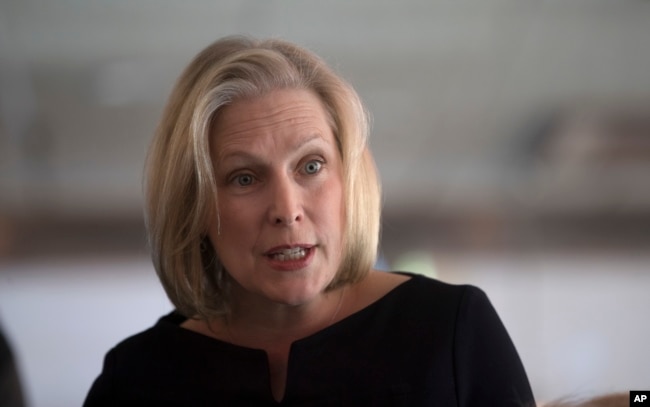
“Their contributions to America in the face of great injustice and persecution should not be forgotten,” said Senator Kirsten Gillibrand, a Democrat from New York.
Senator Kirsten Gillibrand, a New York Democrat.
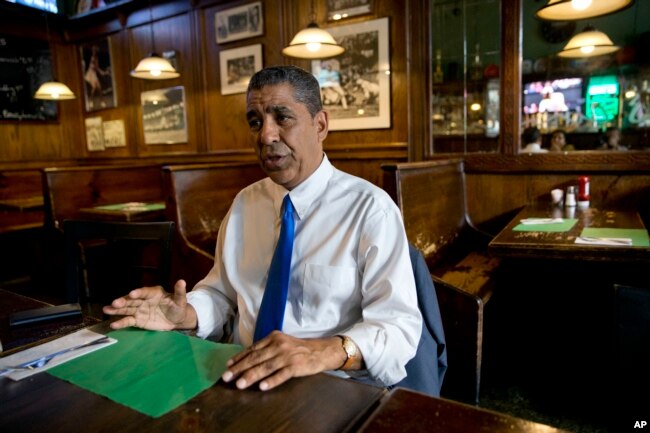
Congressman Adriano Espaillat, another New York Democrat, agreed.
“It has been nearly 400 years since the first African slaves were brought to the United States, marking the beginning of one of the darkest periods of our nation’s history,” he said. Creating a museum and education center, Espaillat said, is a great way to examine the “suffering and injustice slavery” created throughout America.
Congressman Adriano Espaillat
Michael Blakey is a physical anthropologist at William & Mary College in Virginia. He examined some of the skeletal remains that were found at the burial area.
In an interview with Archaeology Magazine online, he said that many people are troubled by human remains. But he said they can provide important information about the people who were buried, including the countries they came from.
“In the proper context, science can give the public a chance to get close to these people,” he told the magazine.
“They stir things in us -- many different feelings at once.”
museum - n. a building in which interesting and valuable things such as paintings, scientific or historical objects are collected and shown to the public
borough - n. part of a large city with its own government -- New York City has five boroughs
monument - n. a building or statue that honors a person or event
contribution - n. something given to benefit somebody or something
persecution - n. to treat someone cruelly or unfairly especially because of race, religious or political beliefs
anthropologist --n. the study of human races, origins, societies, and cultures
context –n. the conditions that affected something that happened
The United States remains a popular destination for immigrants
from Africa, according to the U.S.-based Pew Research Center.
The number
of African immigrants coming to the U.S. has more than doubled since 2000, Pew
saidin a new report.
The organization said that as of 2015, 2.1 million African-born
people were living in the United States. That number is up from 880,000 in
2000. Back in 1970, there were just 80,000.
Monica Anderson is a research associate at Pew and the author of
the study. She said one reason for the large increase is that many immigrants
are refugees from Africa.
She noted that in 1980, only 1 percent of refugees admitted to
the United States were from Africa. Today, that share is about 37 percent.
“That is
one majorfactorthat is driving the growth of African
immigrants, but it doesn't tell the entire story," Anderson told VOA in an
interview.
She said that over the years, certain U.S. areas have developed
large, established populations for African immigrants.
One of those is the Midwestern state of Minnesota. The state is
home to about 25,000 people of Somali origin. This is about one-fifth of the
whole foreign-born population of the state.
“In
differentclustersin the U.S., African immigrants are
really reshaping the immigrant population there,” Anderson said.
Another example is the neighboring state of South Dakota, which
has large refugee communities from Sudan, Somalia and Ethiopia. Overall,
Africans make up about 15 percent of South Dakota’s foreign-born population,
according to Pew.
The top states where African immigrants live are Texas, New
York, California and Maryland.
African immigrants in the U.S. include tens of thousands of
refugees from Somalia, Sudan, Democratic Republic of the Congo and Eritrea, Pew
said.
But it also includes
highly-educated doctors, engineers and others seeking a better life in America.
He said that as of 2013, 38 percent of
sub-Saharan African immigrants had a bachelor's degree or higher, compared to
28 percent of all U.S. immigrants.
But despite the increases, Africans still make up a relatively
small amount of the total U.S. immigrant population.
Capps said there are both
historical and geographic reasons for this.
“It's a long distance from Africa, and the number of people in
Africa with sufficient incomes to migrate that far has been relatively small,”
he said.
He added that the path for legal African migration to the U.S.
was not fully opened until the 1965 Immigration and Nationality Act.
The act,
signed into law by President Lyndon Johnson, removed immigrationquota
systems based on national identity.
This allowed for immigrants of all
nationalities to be accepted equally. The act also made it easier for skilled
immigrants to migrate to the United States.
I’m Bryan Lynn.
Words in This Story
factor – n. something that affects a particular
situation, event, etc.
cluster – n. group of things or
people that are close to each other
quota – n. official limit on the amount of people
allowed
America’s most expensive home is for sale in Los Angeles, California for $250 million.
The new 12,000-square-meter home has 12 bedrooms and 21 bathrooms. The home also has three kitchens, a 25-meter swimming pool, a 40-seat movie theater, spa and bowling alley. It has an elevator to take people up and down four floors.
The bowling alley is shown inside America’s most expensive home, which is for sale in the Bel Air neighborhood of Los Angeles, California, for $250 million. (Bruce Makowsky / BAM Luxury Development)
The home sits on a hill in the Bel Air neighborhood, a favorite living area for movie stars and other famous people. It has great views of the city, mountains and ocean.
American developer Bruce Makowsky built the house. He said only about 3,000 people in the world have enough money to buy it.
The pool with a view is shown as part of America’s most expensive home, which is for sale in the Bel Air neighborhood of Los Angeles, California, for $250 million. (Bruce Makowsky / BAM Luxury Development)
But what makes this home different from the many other expensive ones in Los Angeles? It also comes furnished with many built-in luxuries.
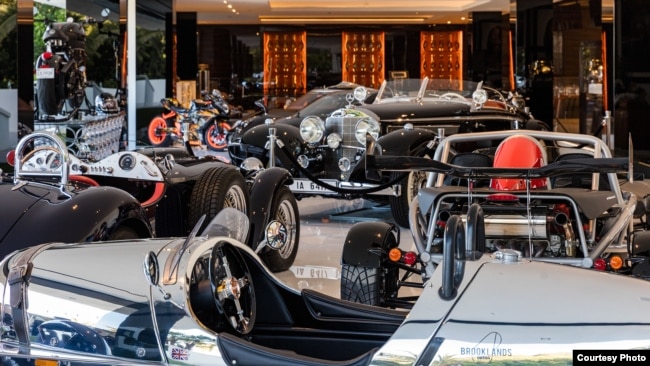
A collection of luxury cars is included for the buyer of America’s most expensive home, which is for sale in the Bel Air neighborhood of Los Angeles, California, for $250 million. (Bruce Makowsky / BAM Luxury Development)
The buyer gets $30 million worth of expensive cars and motorcycles, including a Rolls-Royce, a Ferrari and a Bugatti.
The home also includes many furnishings and art pieces created by well-known designers and artists.
The lounge is shown inside America’s most expensive home, which is for sale in the Bel Air neighborhood of Los Angeles, California, for $250 million. (Bruce Makowsky / BAM Luxury Development)
Included in the price are seven full-time workers who live in a separate part of the home.
Makowsky says people who visit the home quickly run out of words to describe it. “Every single thing in this house makes you feel like you’re in heaven,” he told the Associated Press.
The deck is shown outside America’s most expensive home, which is for sale in the Bel Air neighborhood of Los Angeles, California, for $250 million. (Bruce Makowsky / BAM Luxury Development)
He does not think the $250-million price is too high. He said the right person will be willing to pay for the luxury it provides, rather than just watching their billions of dollars sit in the bank.
“It’s the kind of thing where I can’t sell it," he said. "Somebody has to fall in love with it, and die over it.”
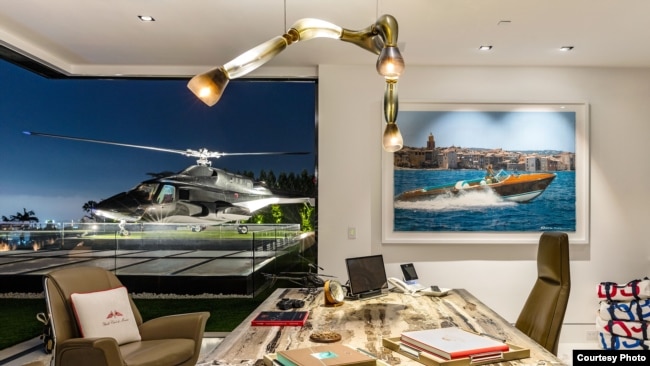
The helicopter is shown outside a window of America’s most expensive home, which is for sale in the Bel Air neighborhood of Los Angeles, California, for $250 million. (Bruce Makowsky / BAM Luxury Development)
One of the most unusual parts of the home is a helicopter sitting on the roof. But the helicopter – an old model used on an American television show in the 1980s – is just for show. Even for $250 million, you cannot buy takeoff and landing rights.
In northern India, an increasing number of young women are learning to compete in the sport of wrestling.
Until recently, few girls and women trained for wrestling in the northern state of Haryana. The area has a strongly patriarchal culture. Men there appear to be in control of the government and much of society.
But after many female wrestlers were successful in international competitions, ideas about women in Haryana began to change.
On a cold winter morning, a group of young girls and women are preparing for three hours of training at the Chottu Ram Stadium, a sports center in the town of Rohtak.
Meenakshi, who uses just one name, is 12 years old. She starts her training at 6 in the morning, before school begins. She and other female wrestlers look up to Sakshi Malik, who trained at the stadium. Malik won a bronze medal at the 2016 Olympic Games in Rio de Janeiro.
Meenakshi notes that Malik’s short wrestling match made her famous throughout the country.
“Only nine seconds she made her life wonderful, completely.”
Many people in Haryana state did not, and still do not, support the idea of women competing in the sport. Men control many of the state’s village councils. And many local women who are pregnant with girls end their pregnancies because they want to have sons. But ideas about women began to change after two women wrestlers performed well at the 2010 Commonwealth Games.
Mandeep supervises training for women and men, girls and boys. Like Meenakshi, he uses just one name. He says that when he came to the stadium six years ago, only a few girls wanted to become wrestlers. Now, he says, many parents want their daughters to train in the sport.
“Earlier, parents stopped the girls (from training in wrestling) and kept them at home because that was the social norm. Now, parents are supporting them in fulfilling their ambitions. It’s a huge social change."
Many of the young women training to become wrestlers live in villages where women’s bodies are often completely covered and where girls cannot mix with boys. The young women include 17-year-old Tina Malik, who has won a national medal in wrestling.
“Earlier, even for practice we could not wear clothes like this. Now we can wear this sports gear -- no one objects.”
Pinki Malik won a gold medal at the 2016 Commonwealth Championship. She hopes to win a medal at the next Olympics. But she says awards are not the only reason she competes.
“Women should get respect. That is the biggest issue -- respect. Wrestling will improve things for us.”
As their success changes people’s opinions, wrestling has become one way for Haryana’s girls and women to create their own future.
patriarch – n. a man who controls a family, group, or government
stadium – n. a very large usually roofless building that has a large open area surrounded by many rows of seats and that is used for sports events, concerts, etc.
inspire – v. to make (someone) want to do something; to give (someone) an idea about what to do or create
norm – n. standards of proper or acceptable behavior
fulfill – v. to succeed in achieving (something); to make (something, such as a dream) true or real
ambition – n. a particular goal or aim; something that a person hopes to do or achieve
medal – n. a piece of metal often in the form of a coin with designs and words in honor of a special event, a person or an achievement
gear – n. supplies, tools or clothes needed for a special purpose
object – v. to disagree with something or oppose something
These days, shopping often involves an Internet connection and a laptop or smartphone. However, businesses are now trying to use new technology, such as 3Dprinting and augmented reality, to bring customers back into stores.
At the recent National Retail Federation show in New York City, many companies demonstrated these new technologies. One, the computer company Intel, is experimenting with 3D printing. It is using the Mach 2XS commercial printer.
Instead of printing words on paper, the Mach 2XS prints clothes. For example, it uses thread to print out a sweater. It prints the sweater out row by row, until it is fully formed.
Ryan Parker is the general manager of Responsive Retail at Intel. He says the 3D printers print out clothing, made just for the individual in size and style, in about 45 minutes.
Bringing consumers back to stores
More and more consumers shop online. But young people still seem to like going to physical stores. A recent study shows that 67 percent of people between ages 13 to 21 shop in physical stores most of the time. The IBM Institute for Business Value and the National Retail Federation did the study.
A London-based company, Ads Reality, is trying to use augmented-reality, or AR technology in stores. Augmented reality is a technology that creates computer-generated images and projects them in a way that they look real.
“When it’s used in the right way, it’s a very powerful tool to drive mobile engagement and store traffic,” said Richard Corps, managing director.
The company’s latest product is an “AR Window.” It superimposes life-sized augmented-reality characters on big screens in store windows.
“It looks like those characters are actually inside the store ... it stops people outside the store because they’re amazed to see these characters ... and then it drives them inside the store because they want to have their photograph taken with these characters,” Corps said.
Customer service robots
Customer service robots might also become a common store experience. The New York company Autonomous is experimenting with customer service robots. These wheeled devices include a Wi-Fi connection to a real person who can be seen on the robot’s screen.
Robots in a hardware store, for example, could be operated from anywhere by experts in different fields, like plumbing or electrical wiring.
Autonomous chief Duy Huynh says the robots can make the shopping experience personal.
“With our technology, when you walk into a store one of our robots will approach you and behind the robot, [it’s] going to bring someone who knows your shopping habits, who has been helping you for the past six months, who knows what you need, to talk to you. So to us that’s really, really important and that’s the very first time you can actually do personalization offline.”
Nigerian President Muhammadu Buhari’s extended medical leave is raising concerns in the most populous country in Africa.
Buhari, 74, has been in London for the last two weeks receiving medical care. He had been expected to return to Nigeria on Sunday night.
But on Sunday, his office released a statement saying the president was advised by doctors to remain in London to await results from medical tests. The statement did not say what he was being tested for, or how long it might be before he could return to Nigeria.
The statement said the president has asked Nigeria’s parliament for approval to continue his medical leave.
Richard Joseph teaches international history and politics at Northwestern University in Illinois. He said President Buhari’s absence is causing concern in Nigeria.
Joseph said it could weaken his government, which already faces charges that it has not done enough to deal with economic and terrorism problems.
“Obviously, there is something significant going on,” Joseph said of the reports that the country’s president would not return to Nigeria this week.
Adding to the concern -- this is President Buhari’s second medical leave as president. He took two weeks off last June to be treated in London for an ear infection.
Joseph said the government’s refusal to provide more information about Buhari’s medical condition has some people questioning if he will return to the presidency. It even led to people questioning on social media if he might be dead.
But Joseph said it is a good signal that Buhari followed the Nigerian constitution. It says the vice president is to become acting president when the president is not available.
Yemi Osinbajo is Nigeria’s vice president. He is a lawyer and professor. Osinbajo has used social media to show how he is carrying out the duties of president in Buhari’s absence.
On Monday, the Nigerian government released a video interview with Osinbajo. He spoke about Buhari, saying "he’s in good shape. In the interview, the vice president also said Buhari's medical tests should be completed soon.
Hundreds of Nigerians protested Buhari’s absence Monday. The march took place in Lagos, Nigeria’s largest city.
Prices of food and other goods have increased as Nigeria deals with low oil prices and a devalued currency. Some of the protesters carried signs about unemployment and hunger.
“Nigerians are frustrated and tired with this absentee government," activist Omoyele Sowore said as he marched in Lagos.